
Singaporeans are quietly changing the way they look for medical information.
Five years ago, patients Googled:
“best clinic for pigmentation treatment Singapore”
Today, most ask ChatGPT:
“My pigmentation is getting darker even after sunscreen. Is this serious?”
Google Gives Links. ChatGPT Gives Answers.
When someone searches on Google, they must:
read and decipher long chunks of information
compare information between different sources
cross check websites reliability
But when they ask ChatGPT, they get:
an immediate explanation
a simple breakdown
reassurance or risk assessment
recommendations on what to do next
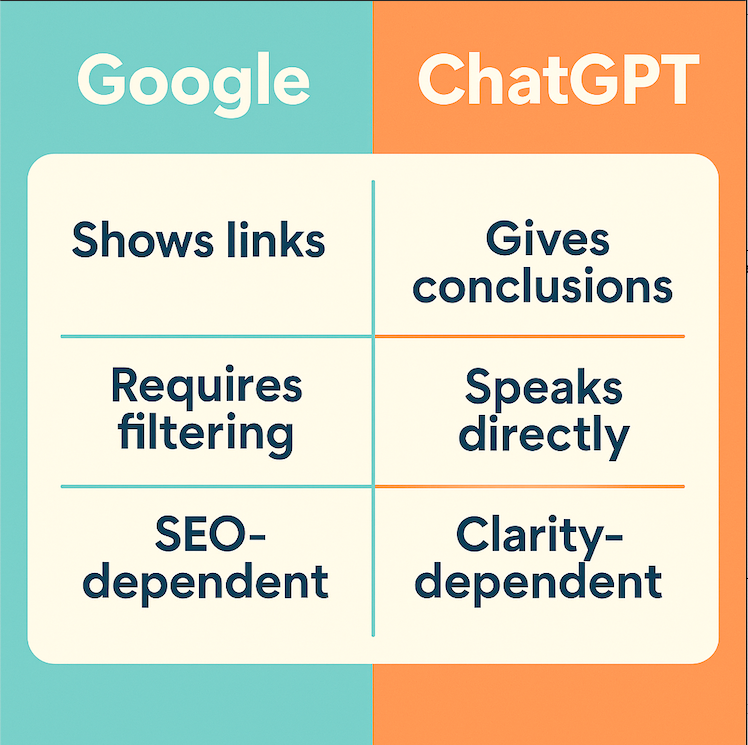
Patients Don’t Want Options — They Want Certainty
If your website feels:
vague
robotic
overly promotional
AI will not quote it.
Patients will not trust it.
Google will not reward it.
People don’t want to be marketed to. They want to feel understood.
To Win on Both Platforms, Write Like You’re Already Mid-Conversation
If your content sounds like a brochure, you lose.
Patients are asking conversational questions like:
“Should I see a doctor or wait?”
“Is it dangerous if I leave it alone?”
“Why is this happening suddenly?”
If your website answers those questions directly, ChatGPT is more likely to suggest your website. Patients are more likely to trust you.
Stop writing for algorithms.
Start writing for actual humans.
Not Sure How to Begin?
If you want to make your content conversational, trustworthy and AI-friendly, read our guide on how to optimize your writing for AI to recommend and patients to trust you.